Dienstag, 22. Mai 2012

Frühling in Paris - Springtime in Paris

Angekommen, gestern Abend, nach kurzer, unspektakulärer Reise, haben wir uns in unserem einfachen, aber gemütlichen Hotel  einquartiert und uns bald zur Nachtruhe begeben, um für den Sightseeingmarathon fit zu sein.
Und los geht es, ich muss, wie immer zur Kathedrale, und Saba muss mit.
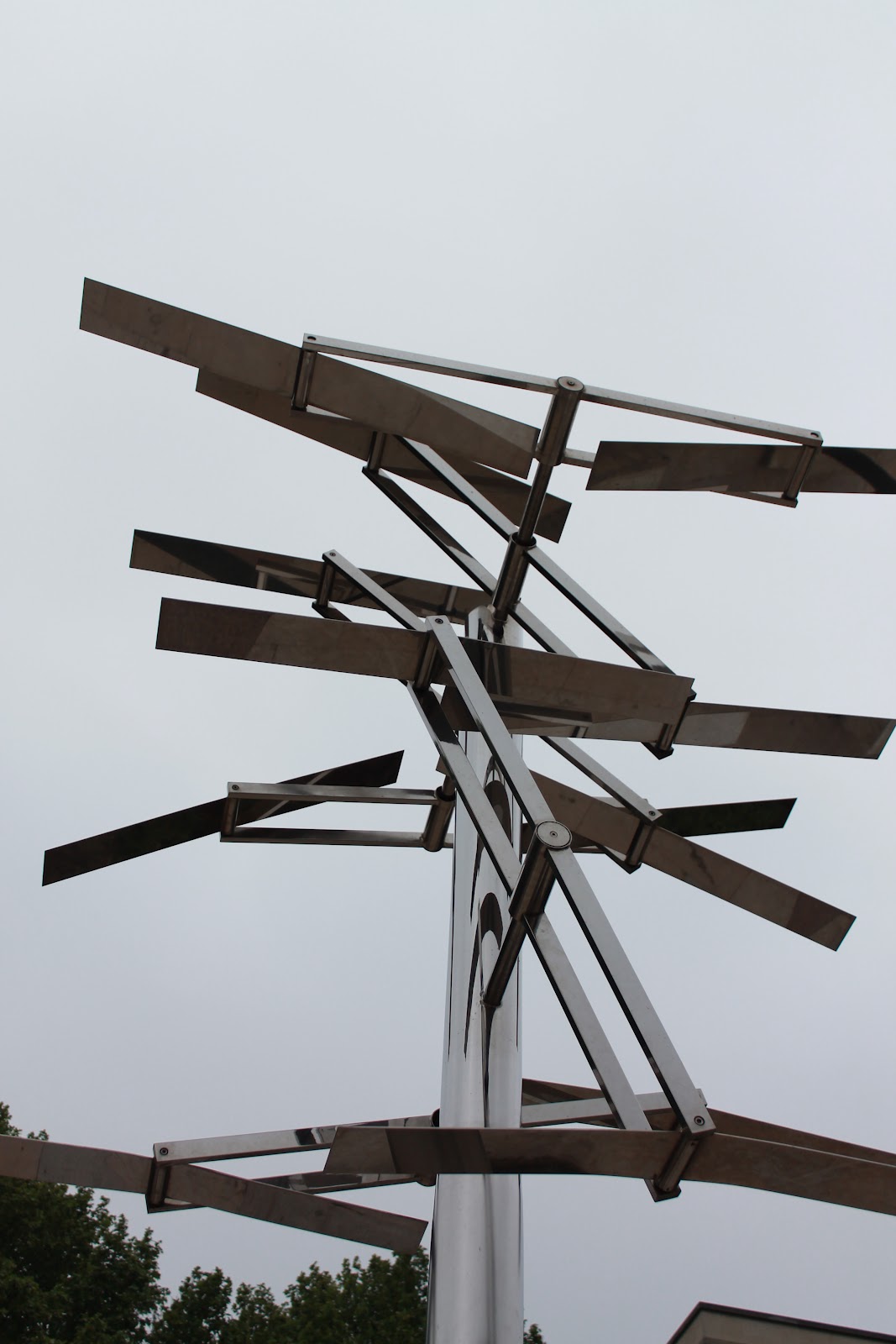
Immer entlang der Seine, entdecken wir einen Skulpturgarten, den wir noch nicht kannten, vorbei an der Ile St. Louis und unter der Pont de la Tournelle, die von der Figur der hl. Geneviève, der  Patronin von Paris gekrönt wird, durch, um schließlich das Ziel meines Wunsches zu erreichen.
Das Mahnmal für die deportierten Juden ist leider nicht zugänglich.
Wir umrunden die Kirche und dann trennen sich unsere Wege, meiner führt mich hinein, in das steinerne Denkmal europäischer Geschichte: Gebaut wird seit 1163, und 1250 war das Gotteshaus rundrum geschlossen und funktionstüchtig. Mitte des 14.Jh steht fest, romanisch ist nicht mehr chic, also, bitte alles neu,und in Gotik. Danke! Kurze Zeit später, 1728, herrschte erneut Unzufriedenheit, das Zeitalter war ein aufgeklärtes und bunte Fenster in der Kirche empfand man als unpassend und entschied sich in Folge für rein durchsichtig als Fensterglas. 1793, während der Revolution wurde die Inneneinrichtung zerstört und alles Metallene eingeschmolzen, die Kirche anschließend zum Tempel der Vernunft geweiht, später diente sie dann wieder geistigen Zwecken, sie war Weinlager. Ab 1802 wurde auf Geheiß Napoleon I. die Kirche wieder liturgisch genutzt und er selbst hat zwei Jahre später dort geheiratet. Obzwar 1805 von Pius VII. zur Basilika minor erhoben, konnte das den Verfall nicht aufhalten, und 1830 während der Julirevolution erneut in Mitleidenschaft gezogen, gab es die Idee, das Bauwerk aufzugeben.
Und dann kam Victor Hugo, 1831 mit der fabelhaften Geschichte von Quasimodo und Esmaralda und der Kirche von Notre Dame, drei Ausgestoßene, deren Schicksal er soll kunstvoll und packend verwoben hatte, dass das Buch einen nicht unerheblichen Ausschlag zum Beschluss allumfassender Restaurierung gab. So hat er der Kirche das Leben gerettet und uns die Kirche erhalten. Danke dafür!






Arrived yesterday in the evening after a short and unspectacular journey, we billet into our simple but cosy hotel room and went to bed early, to be ready for the sightseeing marathon next day.
And here we go, I´m heading for the cathedral and Saba has to come with me.
On our way along the Seine we found a Sculpture Garden, we havn´t seen before, passing the Ile St. Louis und do underpass the Pont de la Tournelle, crowned by St. Geneviève, the patroness of Paris, we reach the destination of my wish.
The Memorial for the deportation of the french Jews is temporary closed.
We do encircle the church, than our ways parting, I go inside, into the stony monument of european history: Build since 1163, and in 1250 the building was completed and operativ. In the middle of the 14th cent. it is clear, romanic is no hip any longer, so it must be changed into Gothic, right now. Thanks! Short time later, in 1728, there was again discontent, the Age of Enlightentment can´t go along with colored churchwindows and demands transparent glas, 1793, during the revolution the church inside was badly destroyed and all metal stuff was melted down, the curch was declared as a temple of sanity, and later it was used in spiritual way again, it became a winestore. After 1802, by order of Napelon I. the church was liturgig used again and he self did married there two years later. 1805 pope Pius VII. declared the church as Basilika minor, but that didn´t stop the decay of the place, and during the July Revolution in 1830 he building was anew affected and so came the idea to give up the church.
Than came Mr. Victor Hugo in 1831 with his fabulous story of Quasimodo, Esmeralda and the Church of Notre Dame, three outcasts, whose fate he had interwoven so artful and gripping, that the book gave a signifacant deflection for the decision to rebuild the church in any way. So he saved the life of the church with his art and the church for us until today. Thanks alot.

Mittwoch, 21. März 2012

Postamt und Kirche - Post Office and Church

Noch etwas Dublin bevor ich nach Paris reise? Bitte schön!
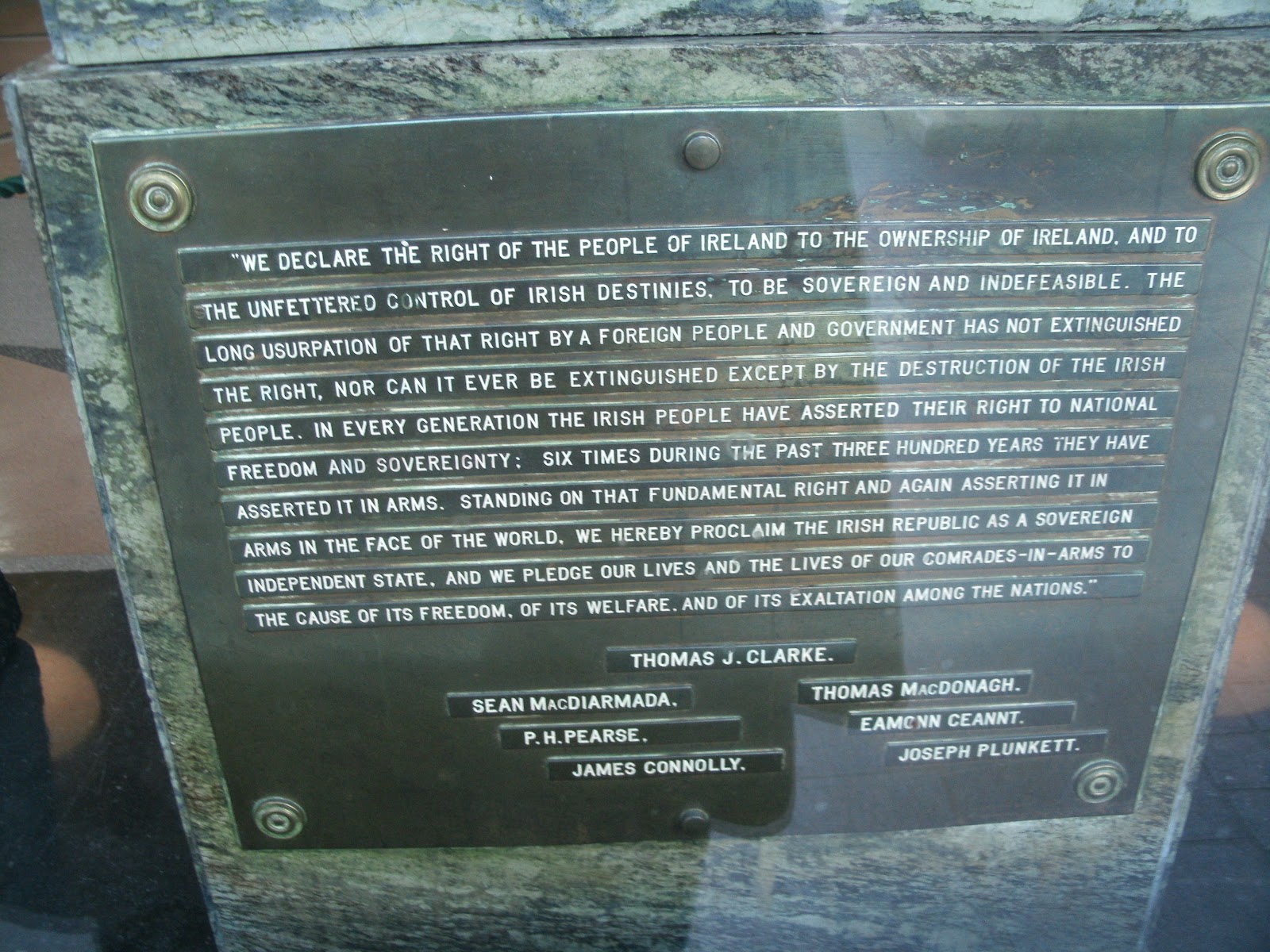
Unweit vom Garden of Remembrance in der O`Connel Street erhebt sich ein mit gewaltigem ionischen Säulenvorbau verziertes Gebäude, hat etwas sakrales, ist aber keine Kirche, nein hier wird Merkur gehuldigt, dem Gott der Kommunikation, es ist das Hauptpostamt von Dublin. 1818 erbaut, riesig, schön und immer noch Postamt, schwer beschädigt beim Osteraufstand 1916, hier verlas James Connolly (http://de.wikipedia.org/wiki/James_Connolly) die Unabhängigkeitserklärung, um danach mit seinen Mitstreitern im Gebäude vor dem englischen Beschuss Schutz zu suchen. 1929 wurde das Postamt wieder eröffnet und im großen Vestibül erinnert eine Statue von Cuchulainn, einem Held aus der irischen Mythologie, an den Aufstand und seine Opfer.
Auf der anderen Straßenseite in zweiter Reihe befindet sich St.Mary´s Pro-Cathedral, Dublins bedeutendes katholisches Gotteshaus, dass eigentlich dort in den Himmel ragen sollte, wo nun eben das Postamt steht. Dieser städtebauliche Kniff geht natürlich auf die englischen Besatzer zurück, die eine katholische Machtdemonstration, selbst architektonischer Art an der Magistrale verhindern wollten. Das Gotteshaus entstand in den Jahren 1816 bis 1825 im Bordellbezirk. Nun, die Kirche ist noch da, die Besatzer sind längst fort, ebenso die Bordelle und die verruchte Montgomery Street heißt seit der Unabhängigkeit Cathedral Street. Die Kirche zeigt dorische Säulen, weil dem Tempel des Hephaistos in Athen nachempfunden und hat trotz dessen oder gerade deswegen erstaunliche Ähnlichkeit mit dem Postamt.
Am Eingang wird schriftlich darauf hingewiesen, dass die Kinder hier in der Kirche sicher sind; na dann ist ja alles gut.
Das Innere ist erstaunlich nüchtern, hell, angenehm, und freundliche Freiwillige bestätigten auf Nachfrage, das fotografieren unbedingt erlaubt ist.
Es gibt einen geschnitzten Altar aus dem 18.Jh und ein Gemälde von Jonathan Smyth "Himmelfahrt Jesu", sowie eine Gedenktafel für Matt Talbot, der einst Alkoholiker war und dann zum Asketen wurde, manchmal genügt es nichts zu tun, um heilig zu sein und zum Schluss das Monument für den ersten irischen Kardinal Cullen, dessen Sockelrelief zeigt, was die Aufgaben der Frauen in der Gemeinschaft sind, Alten- und Krankenpflege, Sterbebegleitung, Kinderbetreuung und lauter so unwichtiger Kram, denn "mit dem Weib kam die Sünde in die Welt" (J.Joyce Ulyssus) und den wichtigen Tätigkeiten der Männer, Gespräche führen, ein kleines Buch in einer Hand halten und den Segen erteilen....
Nun hab ich genug Spiritualität getankt, jetzt brauche ich einen Kaffee.


Some Dublin before I´ll travel to Paris? Here you are!
Not far from the Garden of Remembrance in O`Connel Street a big building is rising up, decorated with Ionic Pillars, looks sacral, but it´s not a church, here they worship Mercury, the god of communication, it´s the General Post Office of Dublin. Build in 1818, giant, beautiful, still a post office, heavy demaged during Easter Rising 1916, James Connolly (http://en.wikipedia.org/wiki/James_Connolly) did read here the Declaration of  Independence and fled after into the building with his companions to rescue them selfs from the shooting by the english troops. In 1929 the post office was reopened and in the vestibule a statue of Cuchulainn (http://en.wikipedia.org/wiki/Cuchulainn) a hero from the irish mythology reminds of the uprising and it´s victims.
On the other side of the street in second row there is St.Mary´s Pro-Cathedral, Dublin´s most important catholic church, wich should rather be there where now the post office is. This town planning gimmick regresses from the english occupants, wich would like to avert a demonstration of catholic power at the main street, even an architecturally one. The church was build in 1816 - 1825 in the brothel area. So, the church is still there, the occupants are gone, even the brothels and the wicked Montgomery Street is called Cathedral Street since the days of independence. The Lord´s House got Doric Column, after the Temple of Hephaistos in Athen and looks a bit, because of that or despite that, like the post office.
At the entry there is a written note, that kids are save here in the church, ah, that´s good at all.
The interior is astonishing prosaic, bright, pleasant, and friendly volunteers confirm my request, yes please, taking pictures is definitly permitted.
There is a carved altar from the 18th cent., a painting by Jonathan Smyth "Ascension of Jesus", a plaque for Matt Talbot, once an alcohol addicted, than an ascetic- sometimes it´s enough to do nothing to become a holy man and last but not least the sculpture of the first irish cardinal Cullen. The plinth panel shows the tasks of women in the community like elder care, nursing, end-of-life care, child care and all those lazy stuff, because "with the trull the sin came to the world" (J.Joyce Ulyssus) and the very importent work of the male, like chatting, holding a small book with one hand and blessing...
Now that´s enough spirituality, I go for a coffee.