Montag, 19. März 2018

Tausend rote Tori und fast so viele Füchse - Fushimi Inari Schrein Kyoto - Thousand red Tori and foxes as well - Fushimi Inari Shrine Kyoto

Nach einem kurzen Besuch in der Gegenwart, möchte ich die geneigte Leserschaft wieder mitnehmen auf meine früheren Abenteuer:
In Tokyo im Nezu Schrein wird der Kami Inari verehrt, der Gott, die Göttin des der Fruchtbarkeit, des Reises und der Füchse (http://fraumb-far-far-away.blogspot.jp/2018/03/fuchse-in-der-stadt-nezu-schrein-tokyo.html). Der Hauptschrein des Inari-Kultes steht in Kyoto, im Bezirk Fushimi. In Kyoto sind sehenswerte Dinge farblich sortiert, es gibt den Goldenen Tempel und den silbernen und einen grünen Bambuswald in Arashiyama, der noch auf meiner Bucket List steht. Diesmal habe ich mich für Rot entschieden.
Der Fushimi Inari Schrein ist bekannt für seine Wege aus zahlreichen scharlachroten Tori und vermutlich eines der häufigsten Postkarten- und Fotomotive in Japan. 
Kyoto und ich, wir pflegen ja eine eher ambivalente Beziehung. Hier habe ich Leute getroffen, die so sehr direkt unhöflich und ablehnend waren, wie man es in Japan nicht vermutet und genauso so freundliche und zuganwandte Menschen, was auch eher selten ist in einem Land, in dem Fremden mit Distanz begegnet wird. Als ich an der Touristeninformation nach einer englischsprachigen Stadtrundfahrt fragte, würde ich angesehen, als hätte ich mich sittenwidrig verhalten, drei Minuten später erklärte mir ein charmanter Senior auf englisch, den Busfahrplan und hieß mich auf deutsch willkommen. 
Mein Besuch im Fushimi Inari fand im Jahr 2015 statt und ich war dann doch baff, als ich am Haupttori mehrere Tische aufgestellt sah, auf denen Schilder aufgestellt waren, in welcher Sprache das jeweilige Infomaterial geschrieben ist und sprachkundige junge Frauen erklärten chinesische Touristen die Örtlichkeit. Dafür gibt’s ein Like von mir und ich mache mich auf, den Schrein zu erkunden. 
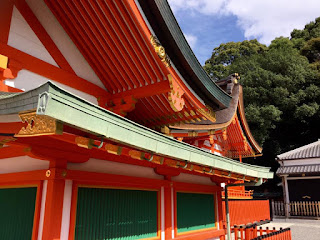
In seinem Aufbau gleicht er den meisten Schreinen, die ich schon besucht habe, allerdings ist er wirklich alt, was in einem Land, in dem aus Holz und Papier gebaut wird und das regelmäßig von Erdbeben geschüttelt wird, die auch offene Feuerstellen umwerfen, eher selten ist. 
Der Schrein wurde 711 gegründet und 816 an diesen Ort verlagert. Die Hauptgebäude wurden 1499 errichtet. 
Die Hauptattraktion hier sind die langen Reihen aus roten Tori. Obwohl der Kami Inari in erster Linie mit Fruchtbarkeit, Reis und Fuchs assoziiert wird, verehren vor allem Händler und Geschäftsleute ihn. Allerdings finde ich das folgerichtig, Fruchtbarkeit ist ein weiter Begriff und mit Reis kann man handeln und reich werden, und ist man schlau wie ein Fuchs, ist man erfolgreich als Geschäftsmann/frau. Die roten Tori, es sind ca 32000, sind Geschenke an den Schrein, gestiftet von Einzelpersonen, Familien, Unternehmern und die Namen der Spender erscheinen aus der einen Seite des Tori.
Und nun kommen wir zur Aufgabe des heutigen Tages: Machen Sie bitte ein Foto von der Allee der roten Tori ohne zusätzlich Personen abzubilden! 
Schaffe ich, wetten? 

English version below


After a short intermezzo in the present I’d like to take the interested reader onto my past adventures again:
In Tokyo at Nezu Shrine the Kami of Inari is worshipped, the God, the Goddess of fertility, rice and foxes (http://fraumb-far-far-away.blogspot.jp/2018/03/fuchse-in-der-stadt-nezu-schrein-tokyo.html). The main shrine of Inari cult is located at Fushimi district in Kyoto. In Kyoto interesting things are sorted by colour, there is a Golden Tempel and a silver one, and a green forest of bamboo in Arashiyama, which is still on my bucket list, but this time I chose red. 
The Fushimi Inari Shrine is famous for its lines out of numerous scarlet red Tori, probably one of the most frequent postcard and pictures subject in Japan. 
Kyoto and me, we are in a kind of ambivalent relationship. Here I met the most directly rude and hostile persons, you never would have expected in Japan and even so friendly and open people, you neither expected in a country that is very distant when it comes to strangers. At the tourist information I was looked at like I’m something indecent because I asked for an English bus tour and three minutes later a charming senior explained the bus schedule to me and gave me a warm welcome in German. 
My visit in Fushimi Inari Shrine took place in 2015 and it blew me away as a so little desks at the main gate with information flyers in different languages and young women were talking to Chinese tourists about the facility. For that they get a Like from me and I’m off to explore the area. 
All in all, it’s not so different from many other shrines I already visited, but it’s real old. Not such a common thing in a place where they build out of wood and paper and the country is often shaken by earth quakes, the frequently flip over open fire places. 
The shrine was founded in 711 and relocated to this area around 816, the main buildings were erected in 1499.
The main attraction here are the lines, lanes and alleys of red Tori. Despite the Inari Kami is for fertility, rice and foxes, it’s mainly worshiped by merchants and business people. But for me it’s kind of logical, fertility got a stretchy meaning and one can trade with rice and if one is as cunning as a fox, you will be a successful businessman/woman. The red Tori, those are about 32000, are gifts to the shrine, donations of persons, families and companies and their names are written down at one side of the Tori. 
And now here is the assignment of the day: take a picture of a Tori alley without any persons in it!
Challenge accepted! 

Sonntag, 18. März 2018

Geburtstag feiern mit Leuten, die man eigentlich nicht kennt - Moi Dix Mois - Having a birthday party with folks you barely know.

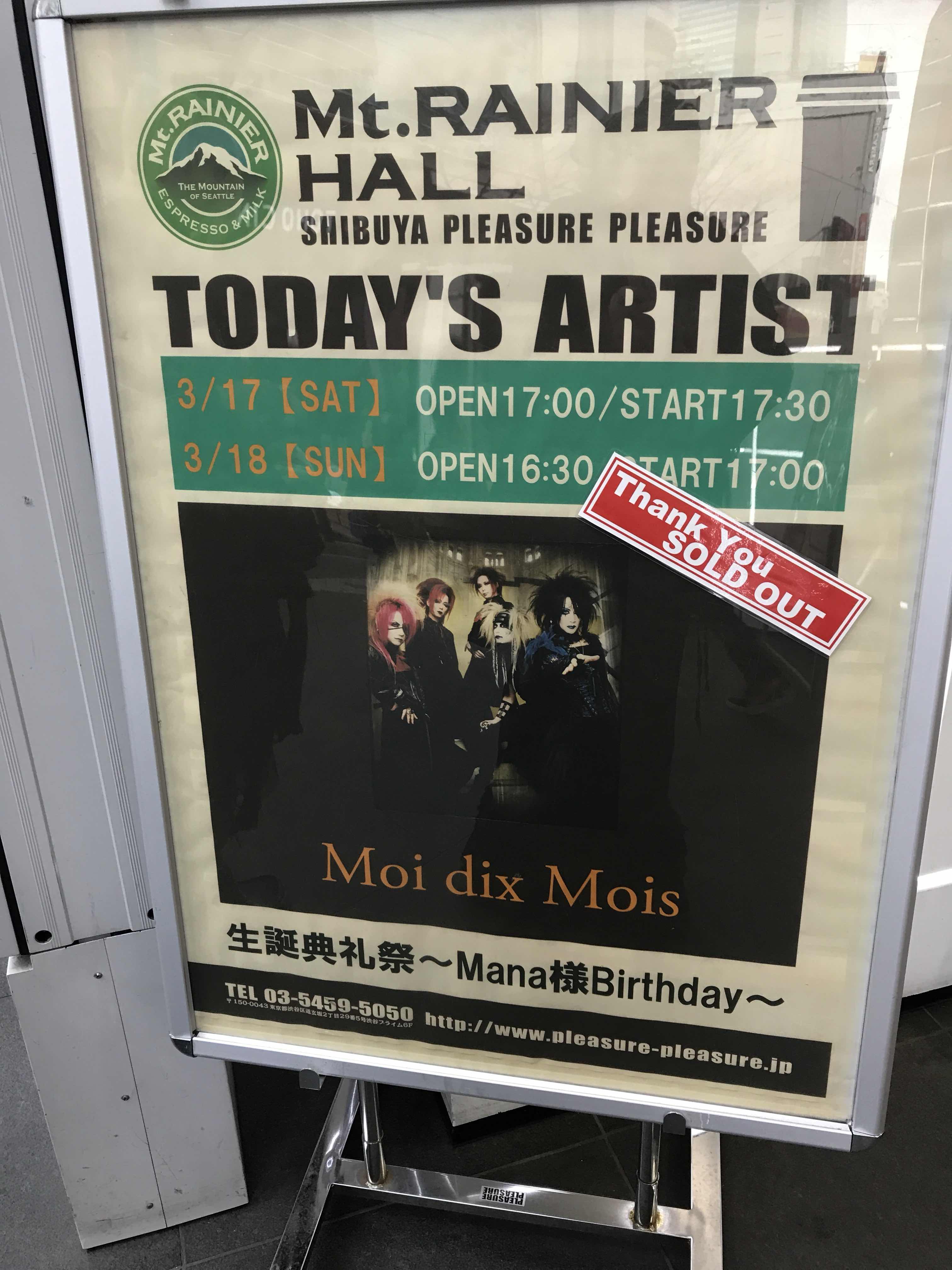
 Neben vielen anderen schönen Sachen will ich auch schöne Musik hören. Meine Freundin Sarah hat keine Mühen und ich keine Kosten gescheut und nun gehen wir zum Konzert von Moi Dix Mois.
In Japan sind Konzerte immer generalstabsmäßig organisiert, egal wie klein die Butze ist, in der die Veranstaltung stattfindet. Also wird man viel hin und her dirigiert, von sehr wichtigen und sehr lauten Platzanweisern an verschiedene Plätze verwiesen und dann durften wir das Musiktheater betreten und uns auf unsere nummerierten Platz setzen. Wie aufregend. 
Was mir hier sehr gefällt ist, dass Konzerte in der Regel pünktlich anfangen. Und los geht’s. Die Band ist sehr stet, seit ca acht Jahren gibt es irgendwie das gleiche Programm, aber doch in gleichbleibend guter Qualität. Und dann gibt es das Jetzt. Der Sänger erscheint als der Letzte nach seinen Kollegen und trägt passend zum Frühlingsanfang ein Vogelnest auf dem Kopf. Nein, Moment, noch mal genauer hinschauen, es ist eine Perücke, schaut aus wie ein Überbleibsel vom letzten Halloween. Egal, ich will ja nicht seine Frisur bewundern, sondern seine Stimme. Die mag ich echt sehr. Aber heute nicht. Entweder ist er heiser oder die Technik hat versagt. Nach zwei Titeln dürfen wir uns alle hinsetzen und die Veranstaltung aus unseren gemütlichen Sitzpolstern weiter verfolgen. Ich bin am Überlegen, ob ich das Konzert auslasse und gleich essen gehe. Die Atmosphäre ist extrem angespannt. Der Rhythmusgitarrist and der Bassist versuchen mit der Dekoration zu verschmelzen und der schweigsame, nein stumme Bandleader und Leadgitarrist wirkt extrem schlecht gelaunt. Ich weiß, warum ich keine Geburtstagsfeiern mag. 
Im Laufe der nächsten beiden Titel gelingt es dem Soundtechniker, einiges zu richten und die Stimme des Sängers kommt etwas besser rüber, die Stimmung insgesamt hebt es nicht. 
Irgendwann verschwindet der Chef von der Bühne, der Schlagzeuger beginnt relativ fröhlich vor sich hin zu trommeln und nun folgt ein Ritual, das ich von anderen Jahren kenne und was bei den Fans hier sehr beliebt ist, bei mir aber immer Fremdschämen auslöst. Der Sänger animiert uns dazu, dem Boss zu erklären, dass wir ihn lieb haben, das bitte auf französisch und wenn der Lautstärkepegel genehm ist, erscheint er mit einem Teddybär-Plüsch-Rucksack aus dem er Geburtstagsgeschenke verteilt, also Bonbons in die Menge wirft. Das ist ein bisschen wie Köln im Karneval. Nett war hier, dass auch das Publikum auf dem Rang bedient wurde, so mit persönlich vorbei kommen und Hände schütteln. 
Dann holte der Sänger sein Klemmbrett raus und hielt eine Rede, erzählte von den nächsten Konzerten und dann wurde Happy Birthday gesungen, also nicht von mir. Ich meine, der Sänger sang heute schlecht, aber ich singe schlechter.
Dann ging es weiter in der Setlist, die Atmosphäre entspannte sich etwas und die größeren technischen Problemen waren behoben. 
Es gab noch eine Unterbrechung mit viel Text und ohne Melodie und das Publikum wurde aufgefordert, den Rhythmusgitaristen ‚Dorotabou’ zu rufen, eine Fortsetzung einer spaßigen Einlage vom letzten Jahr, die diesmal ihre Steigerung in ‚Kono kuso Dorotabou‘ finden sollte. Ein Dorotabou ist ein japanischer Geist und die Aufforderung ‚Kono kuso Dorotabou‘ kam gar nicht gut an. Sarah erklärte mir nach dem Konzert, dass dieses durchaus als derbe Beleidigung aufgefasst werden kann. Ich dachte nur noch, macht fertig, ich will nach Hause.
Es gab zwar durchaus eine Steigerung der Qualität, aber alles in allem war das das schlechteste Konzert der Band, welches ich zu sehen das Missvergnügen hatte. Gut, dass ich nicht alleine da war, so konnte ich mich mit Gleichgesinnten austauschen und fröhlich ablästern.
Allerdings ist mit einer Party die Angelegenheit nicht ausgestanden, uns steht noch ein zweites Konzert ins Haus. Ich treffe mich vorher mit Sarah auf einen Kaffee, damit wir zwei Lästerschwestern uns schon mal warm laufen können.
Ankommen am Veranstaltungsort, gleiches Ritual wie gestern, wie immer. 600 ¥ (4,65€) kriegt der Veranstalter noch zusätzlich, für ein Getränk, ich entscheide mich für einen Mojito aus der Flasche mit 3% Alkohol, ich bin sicher, ich werde es brauchen.
Und los geht’s, Auflauf der Künstler, der Sänger heute ohne gräßlichen Kopfputz, dafür neu verfönt, die Band spielt die ersten Töne und es herrscht sofort tolle, ausgelasse Stimmung, der Sänger ist wieder gut bei Stimme, Bassist und Rhythmusgitarrist haben einen Riesenspass und der Bandleader, der am nächsten Tag wieder ein Jahr älter wird, schaut wesentlich weniger mürrisch. Meine Bekannten und ich schauen uns an und sind so: Wow, was ist da passiert. Hier ist genau die Spielfreude, die Professionalität und die gute Unterhaltung, die ich an der Band so schätze.
Natürlich werden auch diesmal wieder Reden gehalten und Bonbons verteilt, aber das ist eher so nebenbei. Hauptperson ist heute die Musik.
Auch scheint dem Boss aufgefallen zu sein, dass sein Dorotabou-Witz eher weniger gut ankam und er hat darauf verzichtet.
Bei der nächsten Gesprächseinlage sollen wir dem Geburtstagskind bescheinigen, dass er niedlich und sexy ist. Autsch! Wo ist mein Alkohol? Ich halte mich an der Flasche und an der Stuhllehne der Vorderreihe fest, damit ich nicht vor Lachen zusammen breche oder wegen Fremdscham im Boden versinke. Bin noch unentschieden. Der Betreffenden hat das Statement offenbar akzeptiert und wir widmen uns wieder den schönen Dingen im Leben, der Musik.
Es war ein tolles Konzert, großartige Musiker, klar, zwischendrin ein bisschen gaga, aber vielleicht muss das hier so. 
Ich bin sehr dankbar, dass findige Tüftler einen Weg gefunden haben, Musik zu konservieren. Ich höre jetzt Moi Dix Mois und freue mich auf September. Auf das nächste Konzert.


Es ist in Japan nicht erlaubt, während eines Konzerts zu fotografieren, darum ist die Anzahl der Illustrationen hier sehr limitiert. Meine Freundin Sarah (mana-sama.net) liest hier in dem Buch ‚Sushi und Stromgitarre‘ von Steff Astan. Wer an japanischer Rockmusik ebenso interessiert ist, wie ich, sollte sich dieses Buch unbedingt zu Gemüte führen.
In Japan it’s not allowed to take pictures during concerts, that’s why the number of illustrations is very limited. My friend Sarah (mana-sama.net) is reading in the book ‘Sushi and Stromgitarre’ by Steff Astan, only available in German language right now, but very interesting for everyone who is into Japanese music like me.


Beside many beautiful things I’d like to do here, I want to listen to beautiful music too. My friend Sarah did spare no effort and me no money and now we are off for the concert of Moi Dix Mois.
In Japan concerts are always organised with military precision no matter how small the flatlet is where the live takes place. We were send to this or that corner by very important and very loud  ushers to found ourselves in the end in the music theatre at exactly that seat, that was written at the ticket. Amazing.
What I really like here is, that concerts mostly starts in time. There we go. The band is very constant. Since about eight years it’s somehow the same show, but in a steady good quality. But now is now. The singer appears as the last one after his colleagues and wears, because it’s springtime, a bird net on his head. No, wait a minute, have to double check it, it’s actually a wig, a leftover from Halloween maybe. But I’m not here because of his hair, but because of his voice. I like it much. But not now. Maybe he is hoarse or the sound system is a mess. After two songs we were asked to take a seat and now we watch the whole issue from our cosy and comfy plush chairs. I’m already thinking of skipping the whole thing and go straight to dinner. The atmosphere is extremely tense, the rhythm guitarist and the bass player try to hide in the decorations and the silent, no, mute band leader looks extremely pissed. I do know, why I dislike birthday parties.
During the next songs the sound engineer did improve the sound, the singer’s voice sounds slightly better, but the mood doesn’t improve. 
Somewhen the boss leaves the stage, the drummer starts playing a funny rhythm and now comes a ritual, I know from other years and it’s highly valued by the fans here, for me it causes second hand embarrassment. The singer incites us to tell the boss, the we do love him and we should do this in French, when the pitch reaches a decent level, said boss will return with a fluffy teddy bear backpack and shares some gifts with us, means, throws candy into the crowd. It’s a bit like carnival in Cologne in Germany. It was nice, that he went up to the balcony to meet and greet the fans over there too. 
Now the singer took of his clipboard and spoke a speech about stuff and next concerts and stuff and then we should sing Happy Birthday, I didn’t, the singer may have sung not good, I’m always worse. 
Then the music goes on, the atmosphere was more relaxed and the technical issues seems to be solved. There was another interruption with much text and no melody and the audience was told to call the rhythm guitarist a ‘Dorotabou’, the extension of a funny interlude from the concert from last year, and it should find its climax in ‘Kono kuso Dorotabou’. A Dorotabou is a Japanese ghost and the phrase ‘Kono kuso Dorotabou’ can be seen as a heavy insult, explained Sarah later to me. It didn’t worked that well with the audience and I was like, get ready, get done, I wanna go home.
There was a kind of improvement during the show, but at least, it was the worsed concert of that band I ever had the displeasure to attend. So good, I haven’t been there alone, chatting with like-minded people and tattle joyful was the real fun. 
The whole affair isn’t done with one evening, we have to come back the next day for a second try.
I meet up with Sarah for a coffee and we two malicious gossip ladies can get a warm up. 
We reach the venue, same procedure like always, the operator gets 600¥ (5,70$) and we get a drink in return, I chose a mojito in a bottle with 3% alcohol. I have the idea, I might need that. 
There we go, running-in of the artists, the singer today without dreadful headdress, but freshly brushed up, the band played the first tunes and the mood is exuberant and playful, the singer got his voice back, the bassist and rhythm guitarist seems to have the time of their life and the bandleader, who will be a year older soon doesn’t look that grumpy. My friends and me are looking at each other and are like: Wow, what happened here. That’s exactly the joy of playing, the professionalism and the good entertainment I so like with that band. 
Of course again a speech must be spoken and candy must be distributed, but that’s just by the way. The main character today is the music. It turned out the boss realised his Dorotabou-joke was at least not such a funny thing, so they skipped it today. At the next interruption of music we were told to insure the birthday boy that he is pretty and sexy. Ouch! Where is my alcohol? I cling to my bottle and to the chair back of the row in front of me, not sure, if I should break down by laughing or sink into the ground by second hand embarrassing. Said birthday boy seems to accept the statement and we go on with the beautiful things in life, with music. 
It was a great live, gorgeous musicians, of course, a bit gaga every now and then, but maybe it should be this way over here. I’m so looking forward to September when I go again to a concert and meanwhile I’m grateful that smart tinkerers found a way to preserve music, so I can hear Moi Dix Mois’s music until the next live. 

Freitag, 16. März 2018

Füchse in der Stadt - Nezu Schrein Tokyo - City Foxes - Nezu Shrine Tokyo

Nicht weit vom Campus der Landwirtschaftlichen Fakultät, wo sich Professor Ueno und sein Hund Hachiko wieder getroffen haben (http://fraumb-far-far-away.blogspot.de/2018/01/backup-endlich-wieder-vereint-hachiko.html), befindet sich der Nezu Schrein. Ich bin schon einmal hier gewesen, ganz kurz, am Ende meiner ersten Wanderung durch Yanaka (http://fraumb-far-far-away.blogspot.de/2012/01/yanaka-die-altstadt-von-tokyo-tokyos.html).
Aber damals war es schon spät am Abend, also ca 17.30 und bald dunkel, außerdem war es sehr voll, es war ja kurz nach Neujahr, dafür waren vielen Frauen sehr schön in bunte Kimonos gewandet. 
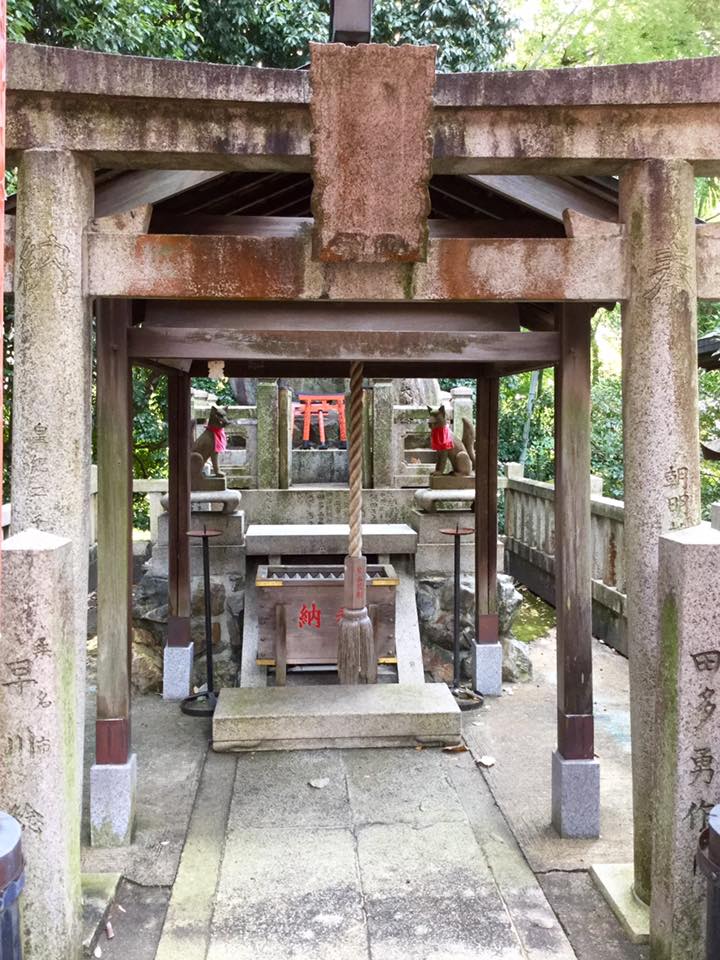
Kimonos gibt es diesmal eher wenige, dafür sind auch nicht so viele Leute da, die Sonne scheint und ich kann mir die vielen Füchse anschauen. Die sind auch alle sehr schick, alle haben neue rote Lätzchen um. Die roten Tücher und Mützen tragen tragen sonst eher die Jizo, die die Seelen der un- oder totgeborenen Kinder in die Anderswelt geleiten, ist das Rot verblichen, ist die Seele angekommen. Hier tragen die Füchse auch rot. Sie sind Diener des Reisgottes Inari und der Schrein im Schreingarten neben der Hauptanlage ist dieser Gottheit gewidmet. Typisch für Inari Schreine sind neben den Füchsen die langen Reihen aus roten Tori. Der bekannteste dieser Schreine ist sicher der Fushimi Inari Schrein in Kyoto, über ihn erzähle ich im Anschluss. 
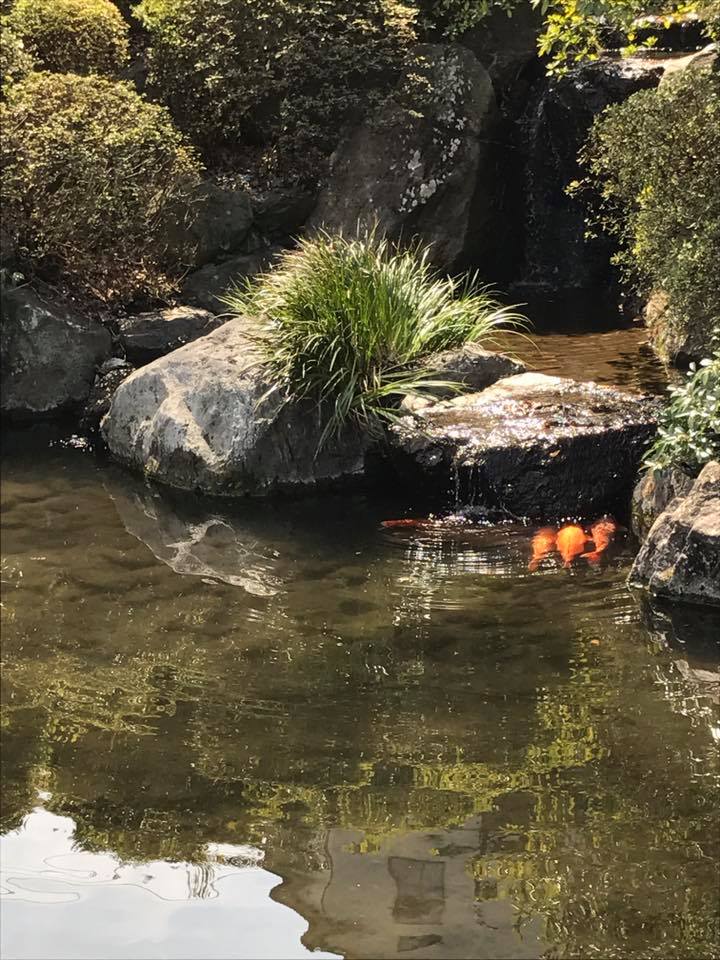
Zum Garten gehört auch ein Teich mit Karpfen und Schildkröten und am Hügel dahinter sind zahlreiche Azaleenbüsche gepflanzt, 50 verschiedene Sorten. Aber im März blühen sie noch nicht, sondern Anfang bis Mitte April.
Der Nezu Schrein gehört zu den drei Schreinen in Tokyo, die den Titel „Wichtiges Kulturerbe“ tragen, die beiden anderen sind der Schrein in Asakusa (http://fraumb-far-far-away.blogspot.de/2011/12/asakusa-tokyos-heiligstem-tempel.html) und der Tōshōgū Schrein im Ueno Park (http://fraumb-far-far-away.blogspot.de/2014/03/toshogu-schrein-im-ueno-park-toshogu.html?spref=pi). 
Eine Schreinanlage wurde vor fast 1900 Jahren in Sendagi errichtet und im Jahr 1705 wurde die aktuelle Anlage vom fünften Shogun Tokugawa Tsunayoshi errichtet. Der Schrein wurde damals auch nach Nezu verlegt, und die Gebäude, die große Halle, die Gebetshalle, das zweistöckige und auch das chinesische Tor sind nahezu im Original erhalten und gehören zu den ältesten Gebäuden der Stadt. 
Bevor der Meiji Kaiser eine strikte Trennung von Buddhismus und Shintō durchsetzte, fand man oft auch buddhistische Elemente an Shintoschreinen. 
Die Gebäude sind im Gongen-Stil erbaut, rot lackiert und opulent geschmückt, was eher typisch für buddhistische Tempel ist. 
Draußen am Karpfenteich schauen ich einigen Hobbymalern über die Schulter und bin beeindruckt von ihrer Professionalität, allerdings scheint es den Leuten nicht so recht zu sein, darum lass ich sie in Ruhe weiter malen und gehe erst mal Kaffee trinken.


Not far from the campus of the agricultural branch of the university, where Professor Ueno and his dog Hachiko met again (http://fraumb-far-far-away.blogspot.de/2018/01/backup-endlich-wieder-vereint-hachiko.html), the Nezu Shrine is located. I’ve been here before, for a brief visit at the end of my first stroll through Yanaka (http://fraumb-far-far-away.blogspot.de/2012/01/yanaka-die-altstadt-von-tokyo-tokyos.html). But it was late at night and nearly dark, so around half past five and very crowded, because it was New Years time, but there were many ladies dressed up in so beautiful kimonos, at least.
There are less kimonos this time, but there aren’t even that many people, the sun is shining and I can have a lock at the many foxes. They are all dressed to impress and got new red bibs. The red bibs and hats are mostly worn by Jizo, who are guiding un- or stillborn children to the Otherworld, is the red faded away, the soul did arrive. Here also the foxes wear red. They are the servants of the rice god Inari and the shrine garden beside the shrine is dedicated to said deity. Typical for Inari shrines are beside the foxes the long lanes of red Tori. The most famous of those kind is probably the Fushimi Inari Shrine in Kyoto, I’ll tell you about that one in the next chapter. 
To the garden belongs a pond with carps and turtles and at the small hill behind are many azaleas planted, around 50 diffent strains. But now, in March, they are not blooming, but from the begin till the middle of April. 
The Nezu Shrine belongs to three shrines in Tokyo that got the title ‚important cultural heritage‘, together with the shrine in Asakusa (http://fraumb-far-far-away.blogspot.de/2011/12/asakusa-tokyos-heiligstem-tempel.html) and the Tōshōgū Shrine at Ueno Park (http://fraumb-far-far-away.blogspot.de/2014/03/toshogu-schrein-im-ueno-park-toshogu.html?spref=pi) . 
A shrine complex war established in Sendagi about 1900 years ago and the actual site was erected at 1705 by the 5th Shogun Tokugawa Tsunayoshi. At this time the shrine was moved to Nezu and the buildings, the great hall, the prayer hall, the two-storey and also the Chinese gate are nearly originally preserved and some of the oldest buildings of the city.
Before the Meiji Tenno demanded a strict separation of Buddhism and Shintō architecture, often Buddhist decoration was found at Shintō shrines. Those buildings here are built in the Gongen-Style, red lacquered and opulent decorated, what is more typical for Buddhist temples.
Outside at the pond with the carps I look over the shoulders of some hobby painters and are very impressed by their professionalism, but it seems, that it was not that appreciated, so I let them go on and be off to find me a nice coffee shop.