In Edinburgh gab es schöne Friedhöfe mit wundervollen Grabsteinen mit keltischen Kreuzen, gibt´s bestimmt hier auch, also auf nach Mount Jerome, den zweitgrößten von zwei Friedhöfen in Dublin. Einst als protestantische Ruhestätte gegründet, aber nun überkonfessionell.
Angekommen, ganz erwartungsfroh, begrüßt mich ein Schild am Eingang, dass auf Büro, Toilette, Kapelle und ... Café? hinweist und kund und zu wissen tut, dass Punkt vier Uhr abgeschlossen wird.
Und dann, dann, dann denke ich, ich bin im falschen Film, habe noch nie einen so unaufgeräumten, verlotterten und versteinerten Kirchhof gesehen, Gräber dicht an dicht, alt, verfallen, zerbrochen, manche planiert und um die nächste Reihe zu gehen, muss man über Grabplatten steigen und kein Baum, kein Strauch, kein Rasen, fast keine Blumen, nur auf ganz frischen Gräbern und dann eher Kunststoff und jede Menge Abfall.
Trotzdem zu Teil sehr schöne Steine und Stelen...
Alles in allem eine sehr surreale Erfahrung...
In Edinburgh were beautiful graveyards with wonderful headstones with celtic crosses, sure those can even be found here. So I´m on my way to Mount Jerome the second largest cemetry in Dublin out of two, once founded as a protestantic churchyard, nowadays ecumenical.
Arrived, very optimistic, I was welcomed by a sign-board at the entry, wich says there is the office, the toilet, the chapel and ... the coffee shop? and announced that the gates will locked sharp 4 o'clock.
And than, than, than... I thought I was in the wrong place, never ever seen such an untidy, scraffy, stony churchyard, graves tightly packed, old, ruined, broken, some flattened, to get to the next row one has to step onto the gravelids and no tree, no bush, no lawn, nearly no flowers, only at the fresh graves and than mostly plastic ones and a lot of rubbish.
Despite a lot of beautiful stones and steles...
All in all a surreal experiance...
Zurück in der Innenstadt besuchte ich den Garten der Erinnerungen (Garden of Remembrance), eine Gedenkstätte für alle die, die im irischen Freiheitskampf ihr Leben verloren haben, ehrt sie die Teilnehmer aus mehreren Aufständen der Iren für ihre Befreiung von der britischen Herrschaft und wurde 1961 eingeweiht von Präsident Eamon de Valera zum 50. Jahrestag des Osteraufstandes, dessen Kommandeur er war.
Gestaltet als kreuzförmiges Wasserbecken mit schönem Wellenmosaik aus blauen und türkisfarbenen kleinen Fliesen und stilisierten keltischen Waffen, nach dem Brauch, zum Zeichen des Waffenstillstandes, diese im Wasser zu versenken. An den oberen Ende dann das Monument der Kinder Lirs, das Auferstehung und Wiedergeburt symbolisiert.http://de.wikipedia.org/wiki/Lir
Back to the city centre I visited the Garden of Remembrance, a memorial for all those who lost der lifes during the struggle for freedom over the centuries,it honors the attenders of many riots against the british regimen and was opened in 1961 at 50th memorial day of the Easter Riots by president Eamon de Valera who was the commander back then.
Designed als a big pool in cross shape with a beautiful tessalation of waves in blue and turquoise little tiles and stylises celtic weapons, because it was a ritus to sink the arms in the water after making peace. At the upper side of the cross basin is the statue shows the Children of Lir, a symbol for resurrection and rebirth. http://en.wikipedia.org/wiki/Children_of_Lir
Freitag, 2. März 2012
Donnerstag, 1. März 2012
Eintauchen in die Geschichte - Diving into History Dublinia & Christ Church
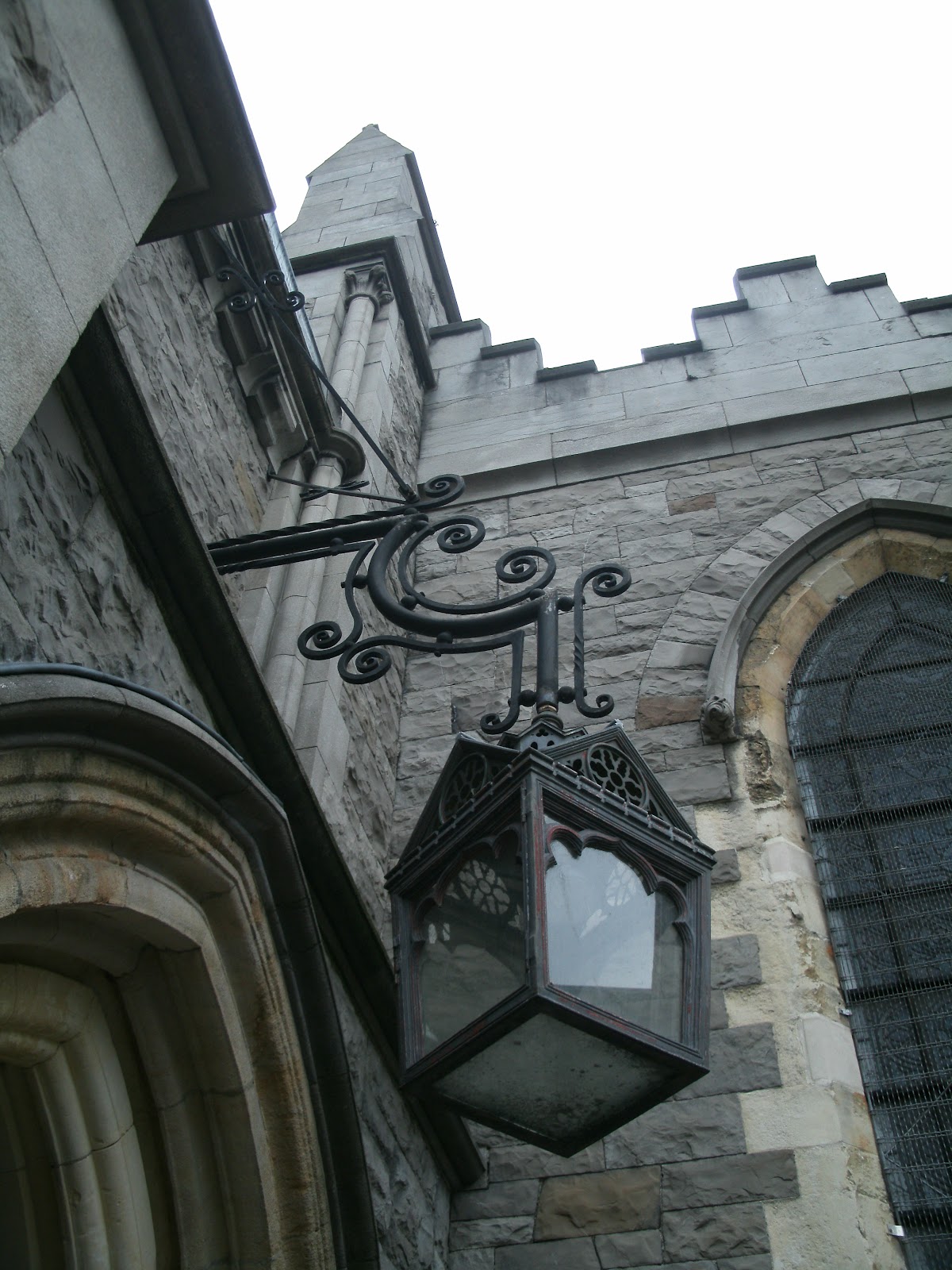
Unweit vom Dublin Castle befindet sich Christ Church Cathedral, die ältere der beiden mittelalterlichen Kathedralen Dublins, ursprünglich erbaut von den Wikingern als Holzkirche 1038; die Steinkirche wurde von Richard de Clare, Earl of Pembroke und dem Erzbischof Laurence O'Toole um 1170 in Auftrag gegeben und ca 1240 fertig gestellt, anfangs römisch-katholisch, nach Heinrich VIII. Lossagung von Rom gehört sie zur Church of England, heute Church of Ireland. Unter Elisabeth I.wurde hier erstmals die Messe in englisch gehalten, kurzfristig kehrte man zur alten Liturgie zurück als James II., der nach Irland geflüchtete katholische englische König hier ein bisschen herrschte, aber nachdem er gegen William von Oranien den Thron verlor, kehrte die Kirche zur anglikanischen Messe zurück. Es tagten auch Gericht und Parlament hier, bis beide Institutionen schließlich in andere Gebäude umsiedelten. Die Kirche war berühmt für ihren Chor, der auch an der Uraufführung des "Messias" von Händel mitwirkte.
In viktorianischer Zeit verfiel die Kirche zusehends, das Kirchenschiff drohte einzustürzen, gerettet wurde sie durch eine private Spende und dadurch umfassend saniert und erweitert, schwer zu sagen, was an Bausubstanz aus dem Mittelalter stammt und was aus dem ausgehenden 19. Jh.
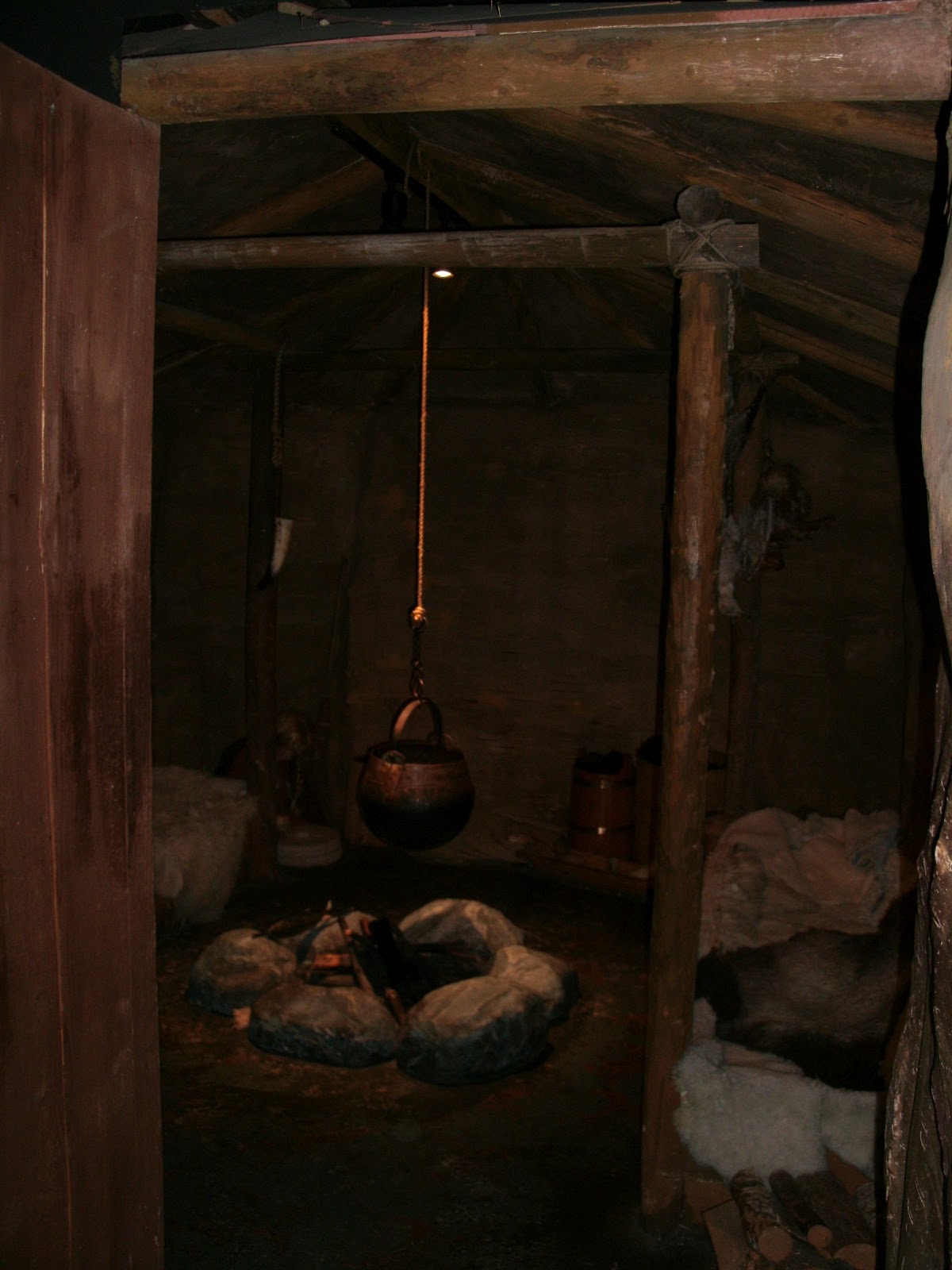
Gleich nebenan, im ehemaligen Bischofssitz befindet sich das Museum Dublinia, ein Querschnitt durch Dublins Früh - und Mittelalter, sehr anschaulich, aufwändig, unterhaltsam.
Tickets gibt´s im Doppelpack, also 2 zum Preis von 2, und los geht´s: zu den Wikingern, ins Mittelalter, zu den Archäologen, die vergrabenes an´s Licht bringen und dann in die Kirche, wo es auch heute noch wenig Licht gab...
Not far from the Dublin Castle there is Christ Church Cathedral, the elder of the medieval cathedrals of Dublin, founded by the Vikings 1038 as a wooden church, the stonechurch was commissioned by Richard de Clare, Earl of Pembroke and the archbishop Laurence O'Toole in 1170 and was finished around 1240, in the beginning roman-catholic, after Henry VIII. declared his renunciation from Rome it belonged to the Church of England and today to the Church of Ireland. Under the reign of Elisabeth I. first time the Mass was hold in english language. For a short time they went back to the latin liturgy when James II., catholic english king who fled to Ireland, did rule here a bit, but after he lost his throne to William of Oranien, the church went back to the english Mass. Also court and parliament sat here, before they move to diffent places. The choir of the church took part in the premiere of the "Messias" by Handel.
In victorian age the church was getting ruined, the nave impants to collapse, the building could be save by a private donation and so a lot of reconstration and rebuilding was done. Hard to tell today wich parts remains from the middle age and wich from the end of the 19th century.
Near by, in the former bishops house is the Museum Dublinia, where one gets an overlook over the Viking and medieval ages of Dublin, very vivid, elaborate, entertaining.
Ticket were given away as twin pack, two for the price of two and here we go: to the Vikings, into the dark age, to the archaeological team, who brings back to the light what was hidden and than into the church, where there is still a lack of light....
In viktorianischer Zeit verfiel die Kirche zusehends, das Kirchenschiff drohte einzustürzen, gerettet wurde sie durch eine private Spende und dadurch umfassend saniert und erweitert, schwer zu sagen, was an Bausubstanz aus dem Mittelalter stammt und was aus dem ausgehenden 19. Jh.
Gleich nebenan, im ehemaligen Bischofssitz befindet sich das Museum Dublinia, ein Querschnitt durch Dublins Früh - und Mittelalter, sehr anschaulich, aufwändig, unterhaltsam.
Tickets gibt´s im Doppelpack, also 2 zum Preis von 2, und los geht´s: zu den Wikingern, ins Mittelalter, zu den Archäologen, die vergrabenes an´s Licht bringen und dann in die Kirche, wo es auch heute noch wenig Licht gab...
Not far from the Dublin Castle there is Christ Church Cathedral, the elder of the medieval cathedrals of Dublin, founded by the Vikings 1038 as a wooden church, the stonechurch was commissioned by Richard de Clare, Earl of Pembroke and the archbishop Laurence O'Toole in 1170 and was finished around 1240, in the beginning roman-catholic, after Henry VIII. declared his renunciation from Rome it belonged to the Church of England and today to the Church of Ireland. Under the reign of Elisabeth I. first time the Mass was hold in english language. For a short time they went back to the latin liturgy when James II., catholic english king who fled to Ireland, did rule here a bit, but after he lost his throne to William of Oranien, the church went back to the english Mass. Also court and parliament sat here, before they move to diffent places. The choir of the church took part in the premiere of the "Messias" by Handel.
In victorian age the church was getting ruined, the nave impants to collapse, the building could be save by a private donation and so a lot of reconstration and rebuilding was done. Hard to tell today wich parts remains from the middle age and wich from the end of the 19th century.
Near by, in the former bishops house is the Museum Dublinia, where one gets an overlook over the Viking and medieval ages of Dublin, very vivid, elaborate, entertaining.
Ticket were given away as twin pack, two for the price of two and here we go: to the Vikings, into the dark age, to the archaeological team, who brings back to the light what was hidden and than into the church, where there is still a lack of light....
Abonnieren
Posts (Atom)